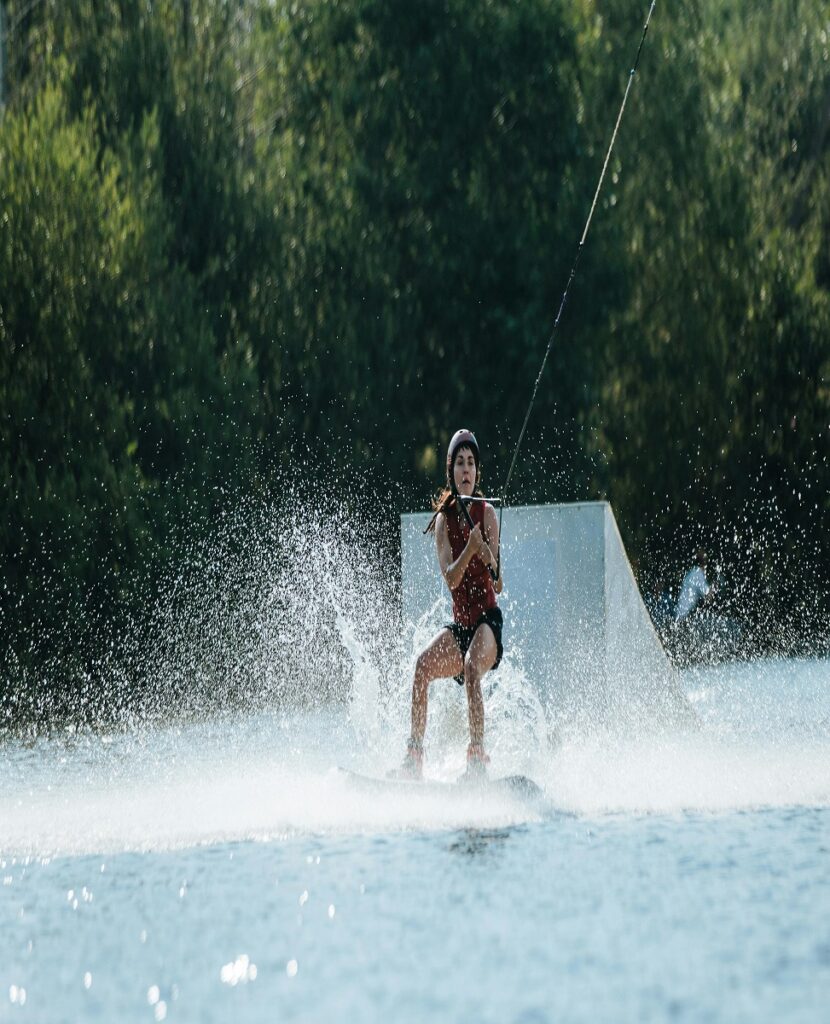
Slalom water skiing is one of the most thrilling and technically demanding disciplines in the world of water sports. Combining speed, balance, and agility, slalom skiing requires athletes to navigate a challenging course, weaving between buoys while being towed behind a boat at high speeds. This sport offers a beautiful blend of grace and power, appealing to both recreational enthusiasts and professional competitors. In this comprehensive guide, we’ll dive into the history, techniques, equipment, and allure of slalom water skiing.
The Origins and Evolution of Slalom Water Skiing
Water skiing as a sport began in the 1920s, but slalom skiing evolved into a distinct discipline in the mid-20th century. Originally, water skiers would ride on two skis, but as techniques improved, athletes began to challenge themselves by dropping one ski, using only a single ski to carve through the water.
The introduction of slalom courses — a sequence of buoys laid out in a zig-zag pattern — added a competitive and skill-based element to the sport. This evolution transformed slalom skiing from a leisure activity into a serious competitive endeavor, with tournaments held around the world and professional athletes dedicating years to mastering the craft.
The Slalom Course: A Test of Skill and Precision
A standard slalom water ski course consists of six buoys arranged in a straight line, with each buoy alternating to the left and right of the boat’s path. The skier must weave in and out, navigating each buoy while maintaining speed, balance, and control.
The challenge escalates as the tow rope is gradually shortened after each successful pass, forcing the skier to make tighter and faster turns. Shorter ropes mean skiers must turn well before they reach the buoy, requiring immense precision and skill. This combination of speed, agility, and technique makes slalom water skiing one of the most demanding and exciting disciplines in watersports.
Essential Equipment for Slalom Skiing
1. Slalom Water Ski
Slalom skis are narrower than recreational skis and are designed to cut smoothly through the water. They are typically made from lightweight materials such as carbon fiber or fiberglass to enhance performance. The design features a concave bottom, which provides better edge control for sharp turns.
2. Bindings
Slalom ski bindings secure the skier’s foot firmly in place, ensuring they have the control needed to execute precise turns. Some bindings are adjustable for comfort, while others are custom-fitted for competitive skiers.
3. Tow Rope and Handle
A high-quality tow rope is essential for slalom skiing, especially in competitions where the rope length is shortened progressively. The handle is typically wider than those used for wakeboarding or trick skiing, allowing skiers to use both hands for maximum control.
4. Life Vest
A well-fitted life vest is crucial for safety. Competitive skiers often use form-fitting competition vests, which offer buoyancy without restricting movement.
5. Boat
The boat used in slalom skiing must be capable of maintaining consistent speeds and creating minimal wake. Tournament boats are designed specifically for this purpose, equipped with advanced speed control systems to ensure uniform conditions for all competitors.
Techniques and Skills for Mastering Slalom Water Skiing
1. Body Position and Stance
A proper stance is the foundation of successful slalom skiing. Skiers must maintain a balanced, athletic position with knees slightly bent, weight centered over the ski, and arms extended but relaxed. The skier’s body should lean slightly away from the boat, allowing them to generate edge pressure for sharper turns.
2. Edge Control
Controlling the edges of the ski is crucial for carving precise turns around the buoys. Advanced skiers learn to shift their weight smoothly to transition from one edge to the other, minimizing drag and maintaining speed through each turn.
3. Timing and Line Management
Slalom skiing is a delicate dance between skier, boat, and course. Skiers must anticipate the timing of each turn, positioning themselves correctly relative to the boat and the buoy. Proper line management—keeping the tow rope taut and at the correct angle—ensures the skier can generate speed into and out of turns.
4. Acceleration and Deceleration
Skilled slalom skiers know when to accelerate and when to ease off. Accelerating into a turn generates the speed needed to carry through, but too much speed can make the turn uncontrollable. Finding the perfect balance is key.
Training and Conditioning for Slalom Skiing
Slalom skiing places significant demands on the body, requiring strength, endurance, flexibility, and balance. Off-season training programs typically include:
- Strength Training: Focused on the core, legs, and upper body to provide stability and power.
- Balance Drills: Exercises on balance boards or BOSU balls help improve coordination and stability on the water.
- Cardio Conditioning: High-intensity interval training (HIIT) mimics the bursts of exertion required during slalom passes.
- Flexibility Work: Stretching and mobility exercises help prevent injury and improve range of motion.
The Competitive Scene
Slalom water skiing competitions are held at local, national, and international levels. Events are typically judged based on how many buoys a skier can successfully round, with shorter rope lengths increasing the difficulty. The International Waterski & Wakeboard Federation (IWWF) oversees global competitions, including the prestigious Water Ski World Championships.
Scoring
Each completed pass adds to the skier’s score, and the final result depends on both the number of buoys completed and the length of the rope. In elite competitions, skiers are often pushed to their limits with extremely short ropes, requiring split-second reflexes and impeccable technique.
The Thrill and Appeal of Slalom Water Skiing
What makes slalom water skiing so captivating is its unique blend of artistry and athleticism. The sport requires skiers to read and react to ever-changing water conditions, adjusting their body position, edge angle, and speed on the fly. Each run is a delicate balancing act between control and chaos, precision and power.
For spectators, the beauty lies in the sheer elegance of a skilled skier carving seamless arcs across the water, sending up glittering sprays as they slice through each turn. For participants, the adrenaline rush of speeding toward a buoy, the satisfaction of a perfect turn, and the challenge of the next, even shorter rope keep them hooked.
Slalom water skiing is more than just a sport; it’s a lifelong pursuit for those who crave both challenge and exhilaration. Whether you’re a recreational skier looking to improve your skills or an aspiring competitor training for your next tournament, slalom skiing offers a dynamic and rewarding experience.
With its rich history, demanding technique, and thrilling competitions, slalom water skiing continues to captivate athletes and fans around the world. The next time you see a slalom skier carving across a glassy lake, you’ll understand that every graceful arc is the product of years of dedication, training, and love for the sport.
The written content on this page was generated by perplexity.ai